


Automation vs AI: What’s the Difference (and Why It Matters)
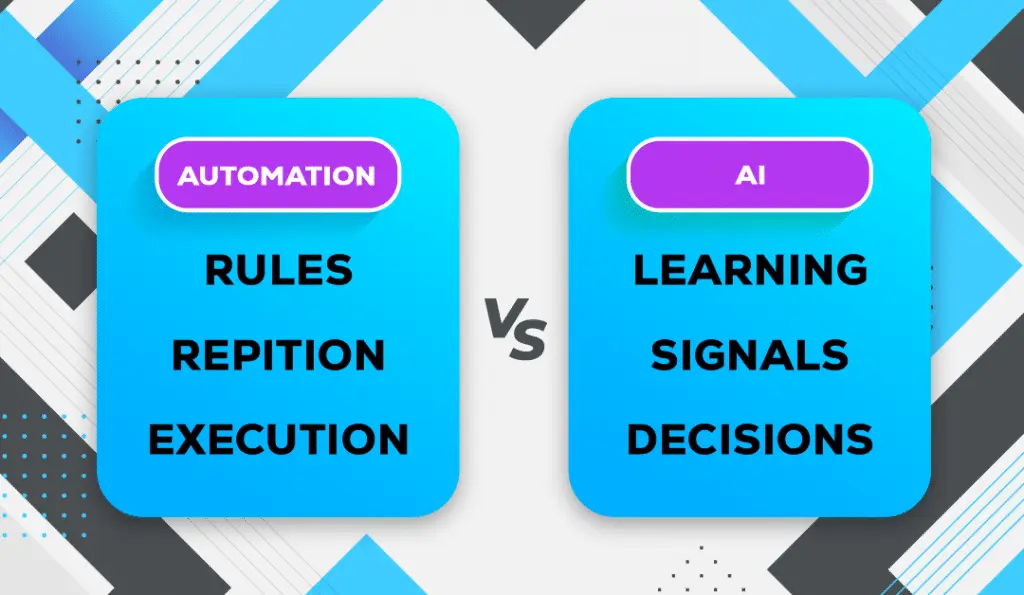
Automation and AI are often treated as interchangeable, but they serve distinct roles in modern growth systems. Automation focuses on execution. AI focuses on learning and decision-making. Confusing the two leads to systems that scale activity without improving outcomes.
Understanding how these technologies differ—and how they complement each other—is essential for building marketing, content, and sales systems that remain effective as complexity increases.
What Automation Does Well
Automation is designed to perform predefined actions consistently. Once rules are set, automated systems can publish content, route leads, trigger communications, and update data without ongoing human involvement. This reliability makes automation invaluable for operational efficiency and scalability.
However, automation does not evaluate whether those actions are still appropriate. It assumes the underlying logic remains valid, even when performance signals suggest otherwise.
What AI Adds on Top of Automation
AI introduces adaptability. By analyzing performance data, behavioral signals, and historical patterns, AI systems can identify what is working, what is declining, and where adjustments are needed.
According to IBM’s overview of AI in marketing, AI enhances automation by enabling systems to respond dynamically to customer behavior rather than repeating static workflows indefinitely.
Why Automation Alone Hits a Growth Ceiling
Automation delivers speed and scale, but growth introduces variability. As audiences diversify, channels evolve, and competition intensifies, static systems struggle to keep pace. This is where automation alone begins to fail.
Automation Scales Tasks, Not Understanding
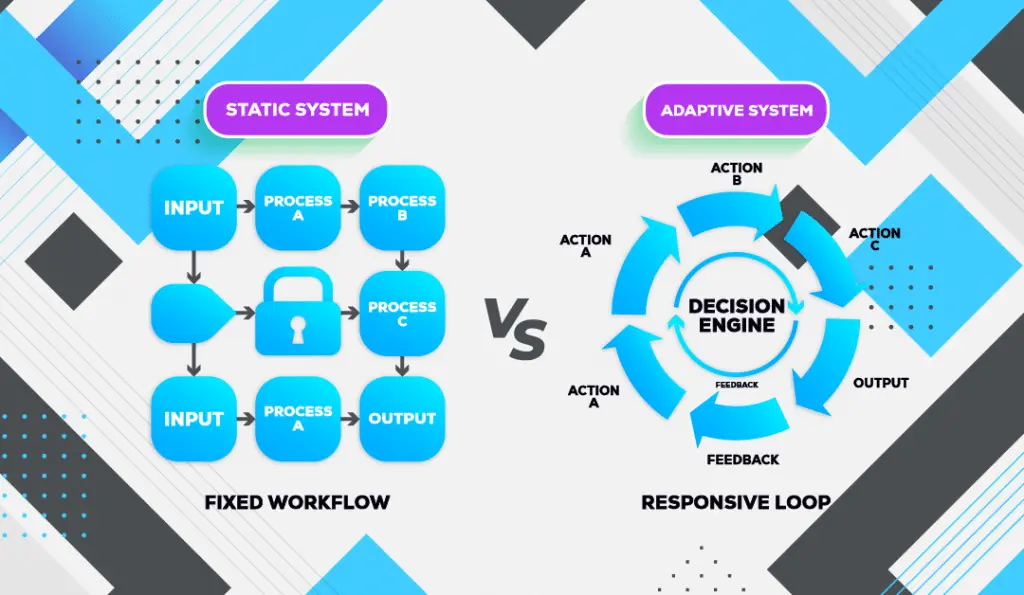
Rule-based workflows assume a stable environment. In reality, audience intent shifts, content performance fluctuates, and market dynamics change rapidly. Automation continues executing the same instructions regardless of results.
Without intelligence to interpret outcomes, teams must manually intervene, creating bottlenecks that limit growth.
Why Static Personalization Breaks at Scale
Traditional personalization relies on predefined segments such as personas, industries, or job titles. While useful initially, these assumptions quickly become outdated as real behavior diverges from expectations.
When personalization fails to reflect actual intent, experiences feel generic and disconnected, reducing engagement and conversion effectiveness.
Content and Personalization at Scale
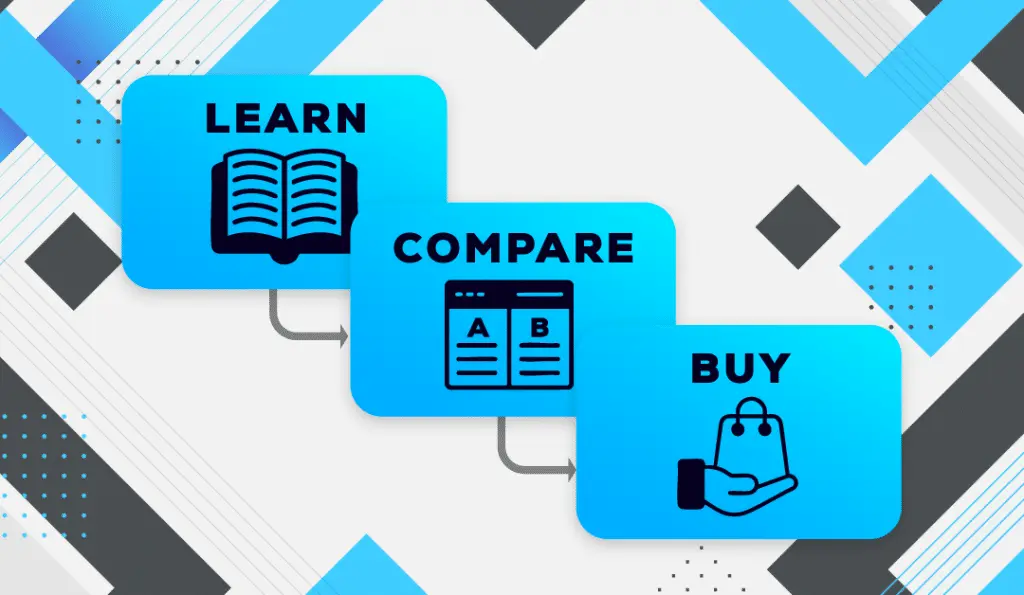
Scalable personalization does not require rewriting content. Instead, it relies on adjusting emphasis, recommendations, and next steps based on observed behavior.
Visitors early in their journey benefit from education and clarity. Those evaluating options need proof and structure. Those ready to act need direct guidance. Adaptive systems recognize these shifts automatically.
This approach aligns with a broader AI-Driven Marketing Strategy, where content systems evolve alongside audience intent.
How Automation and AI Work Together in Practice
When combined, AI and automation form a continuous feedback loop. AI interprets signals from performance data and user behavior, while automation ensures decisions are executed consistently across channels.
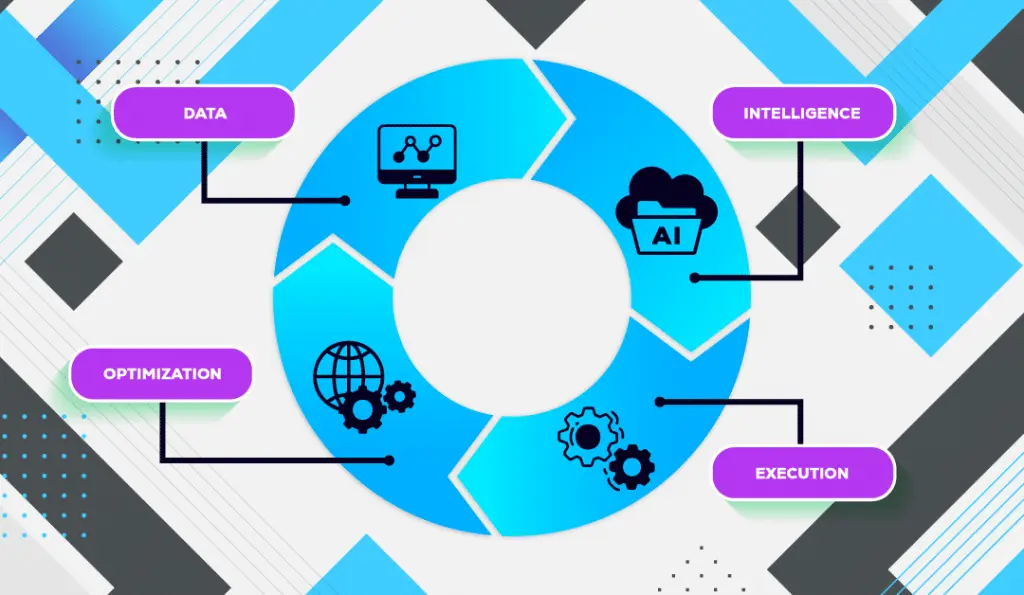
Automation Executes, AI Decides
AI determines priorities—such as which content to surface, which channels to emphasize, or when to shift messaging. Automation then carries out those decisions at scale, ensuring speed without sacrificing relevance.
Research from McKinsey on turning AI promise into business impact shows organizations achieve the strongest results when AI informs decisions and automation handles execution.
From Static Workflows to Adaptive Systems
Adaptive systems improve continuously. Performance outcomes feed intelligence, intelligence refines decisions, and automation applies those decisions in real time.
This learning-based model mirrors the growth flywheel described in BCG’s Blueprint for AI-Powered Marketing.
Real-World Growth Use Cases Across Teams
The benefits of combining AI and automation extend beyond marketing. Growth teams across functions can apply these systems to improve efficiency, relevance, and outcomes.
Marketing Campaign Optimization
AI analyzes campaign performance across channels to identify where attention and budget should be focused. Automation applies these insights quickly, allowing campaigns to adapt as conditions change rather than waiting for manual reviews.
Content Distribution and Experience Optimization
AI helps identify which content resonates with different audiences and at which stages. Automation ensures high-performing content is promoted and underperforming content is deprioritized.
A ScienceDirect study on AI-driven business transformation supports this broader role for AI in improving adaptability and innovation beyond basic automation.
Sales and CRM Intelligence
AI improves lead prioritization by analyzing engagement signals and behavioral patterns. Automation supports timely follow-up and consistent outreach, while sales teams retain control over strategy and relationships.
Building an AI + Automation Growth System the Right Way
Effective systems are built deliberately. Success depends less on tools and more on strategic alignment, data quality, and human oversight.
This is where an AI-powered content engine becomes critical, giving teams a way to turn adaptive strategy into a living system that continuously learns, improves, and scales.
Start With Strategy, Not Tools
Technology should support business goals rather than dictate them. Clear objectives, success metrics, and constraints must be established before introducing AI or automation.
Data Quality Is the Multiplier
AI systems rely on clean, well-structured data. Inconsistent or incomplete data limits insight and reduces the effectiveness of automation, regardless of technological sophistication.
Human Oversight Still Matters
AI enhances human judgment but does not replace it. People define direction, ethics, and accountability. AI helps navigate complexity within those boundaries.
What This Means for Modern Growth Teams
Growth today is not about doing more tasks faster. It is about building systems that learn. Automation scales effort. AI scales intelligence. Together, they create adaptive systems that improve over time.
FAQs
Automation follows predefined rules to execute tasks. AI analyzes data, learns from outcomes, and adapts decisions based on changing conditions.
Automation can scale activity, but it cannot adapt to changing markets or behavior. Growth requires systems that learn and adjust.
AI determines what should happen next, while automation executes those decisions efficiently at scale.
No. AI supports human judgment by providing insights and recommendations. Humans remain responsible for strategy and oversight.