


The rapid rise of artificial intelligence (AI) is transforming the marketing landscape, offering unprecedented opportunities for efficiency, personalization, and innovation. However, as AI becomes more prevalent in creative marketing processes, agencies must navigate a complex set of ethical challenges to ensure responsible and transparent use of these powerful technologies.
The Rise of AI in Marketing: Efficiency vs Ethics
AI has quickly become an indispensable tool for marketing agencies, enabling them to automate tasks, optimize campaigns, and deliver highly personalized experiences at scale. From content creation and ad targeting to sentiment analysis and predictive analytics, AI is reshaping every aspect of modern marketing.
Yet, amidst the excitement surrounding AI’s potential, there is growing concern about the ethical implications of its use in marketing. As AI systems become more autonomous and influential, marketers must grapple with questions of fairness, transparency, accountability, and human oversight.
5 Key Ethical Issues with AI in Marketing
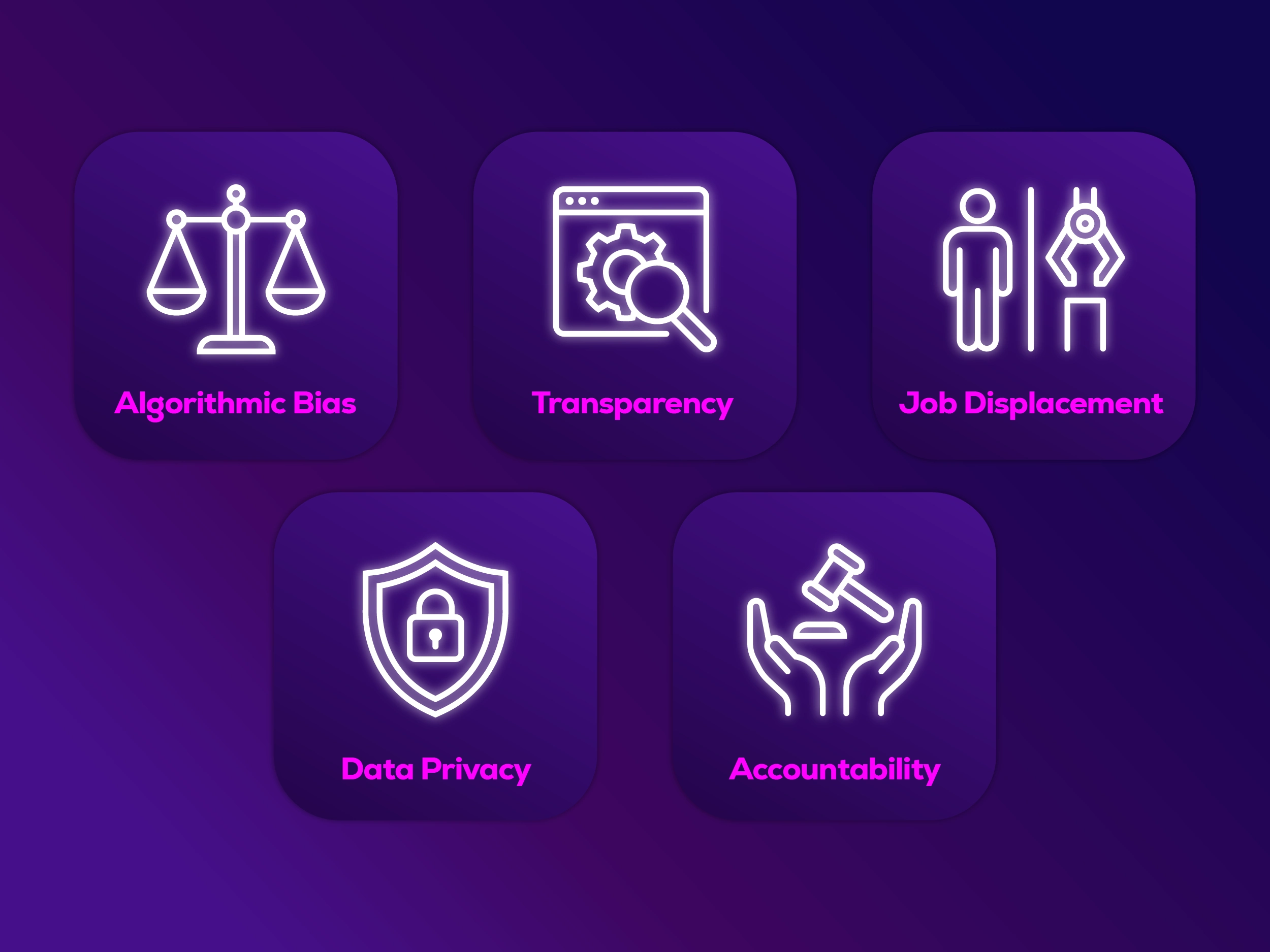
- Algorithmic Bias and Fairness AI algorithms are only as unbiased as the data they are trained on. If training data contains historical biases or lacks diversity, AI systems can perpetuate or even amplify discrimination in marketing outcomes, such as ad targeting or customer segmentation.
- Data Privacy and Consent AI’s power relies on vast amounts of consumer data, raising concerns about privacy, consent, and data misuse. Marketers must ensure they collect and use customer data ethically, with clear opt-in mechanisms and robust security measures.
- Transparency and Explainability Many AI systems are “black boxes,” making decisions based on complex and opaque algorithms. This lack of transparency can undermine trust and accountability. Marketers need to be upfront about their AI use and provide clear explanations of how AI systems make decisions that impact consumers.
- Accountability and Human Oversight
As AI becomes more autonomous, there is a risk of unchecked decisions and unintended consequences. Marketers must maintain human oversight and establish clear lines of accountability for AI-driven actions, ensuring there are safeguards against harmful outcomes. - Job Displacement Fears The automation capabilities of AI have sparked concerns about job losses in marketing and creative fields. While AI can augment and enhance human capabilities, agencies must consider the ethical implications of AI-driven job disruption and prioritize reskilling and upskilling initiatives.
Real-World Examples of Each Issue
- Cases of biased ad targeting, such as job ads shown disproportionately to men over women
- Opaque data collection practices that leave consumers unaware of how their data is used
- AI content creation tools that generate fluent but misleading or biased outputs
- Chatbots that provide harmful recommendations without human review
- Concerns about AI replacing human copywriters, designers, and strategists
An Ethical Framework for AI in Marketing
To address these challenges, marketing agencies need a practical framework for ethical AI use. By adapting general AI ethics principles to the specific context of marketing, we can establish guardrails for responsible AI implementation.
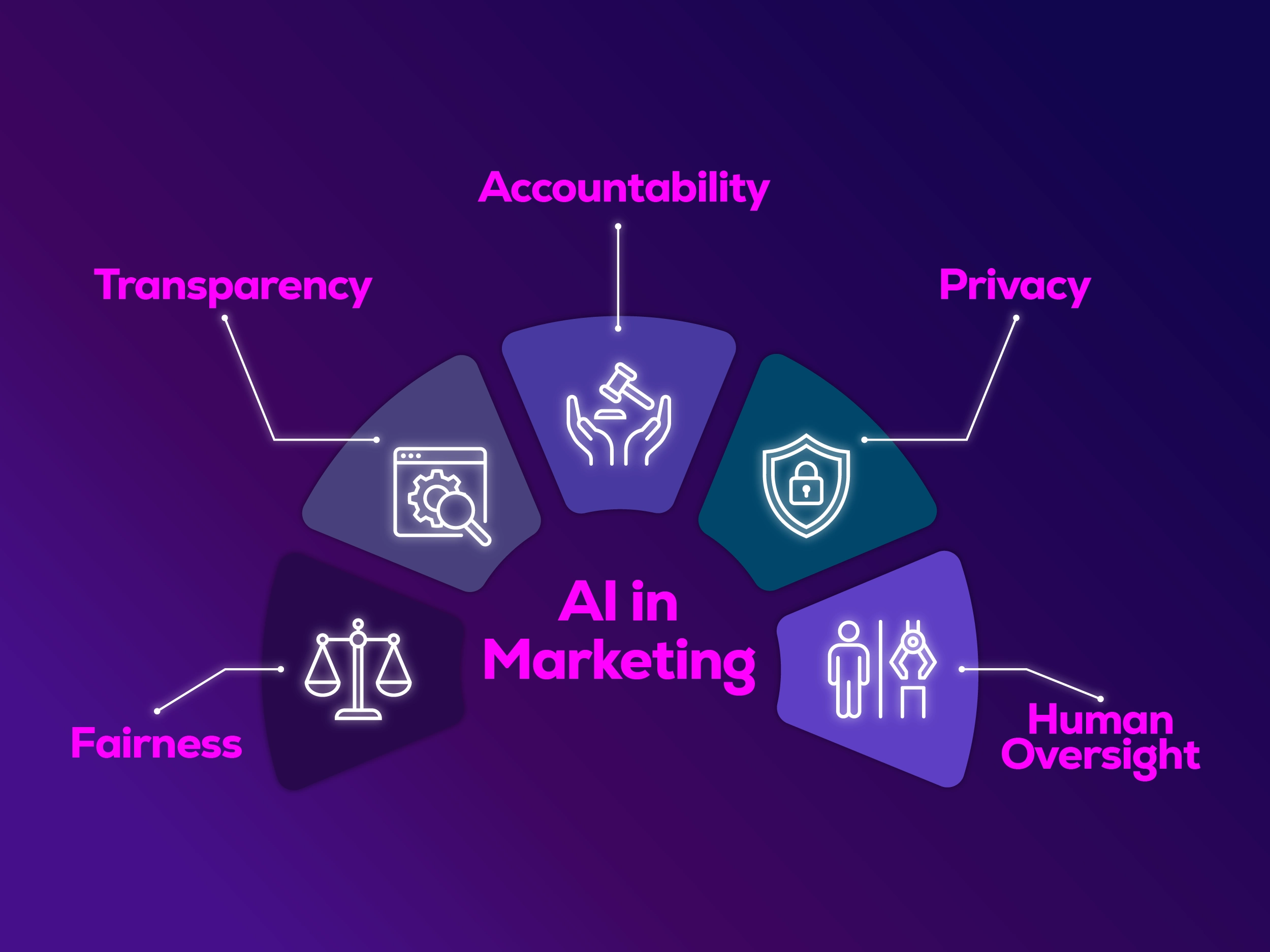
This framework rests on five key pillars:
- Fairness: Ensuring AI systems treat all consumers equitably and without discrimination
- Transparency: Being open and clear about how AI is used in marketing processes
- Accountability: Establishing clear responsibility and oversight for AI-driven decisions
- Privacy: Respecting consumer privacy and giving users control over their data
- Human Oversight: Maintaining human judgment and control in AI-powered marketing
How Growth Conductor Approaches AI Ethics
At Growth Conductor, we’ve embedded these principles into our AI-powered marketing approach:
- We use a human + AI operating model, where AI functions as an efficiency multiplier rather than a replacement for human creativity and strategy
- Our internal AI ethics review process ensures all AI applications align with our values and prioritize customer well-being
- We maintain clear boundaries around AI use, focusing on augmenting rather than replacing human roles
The Role of Human Strategists in AI-Powered Marketing
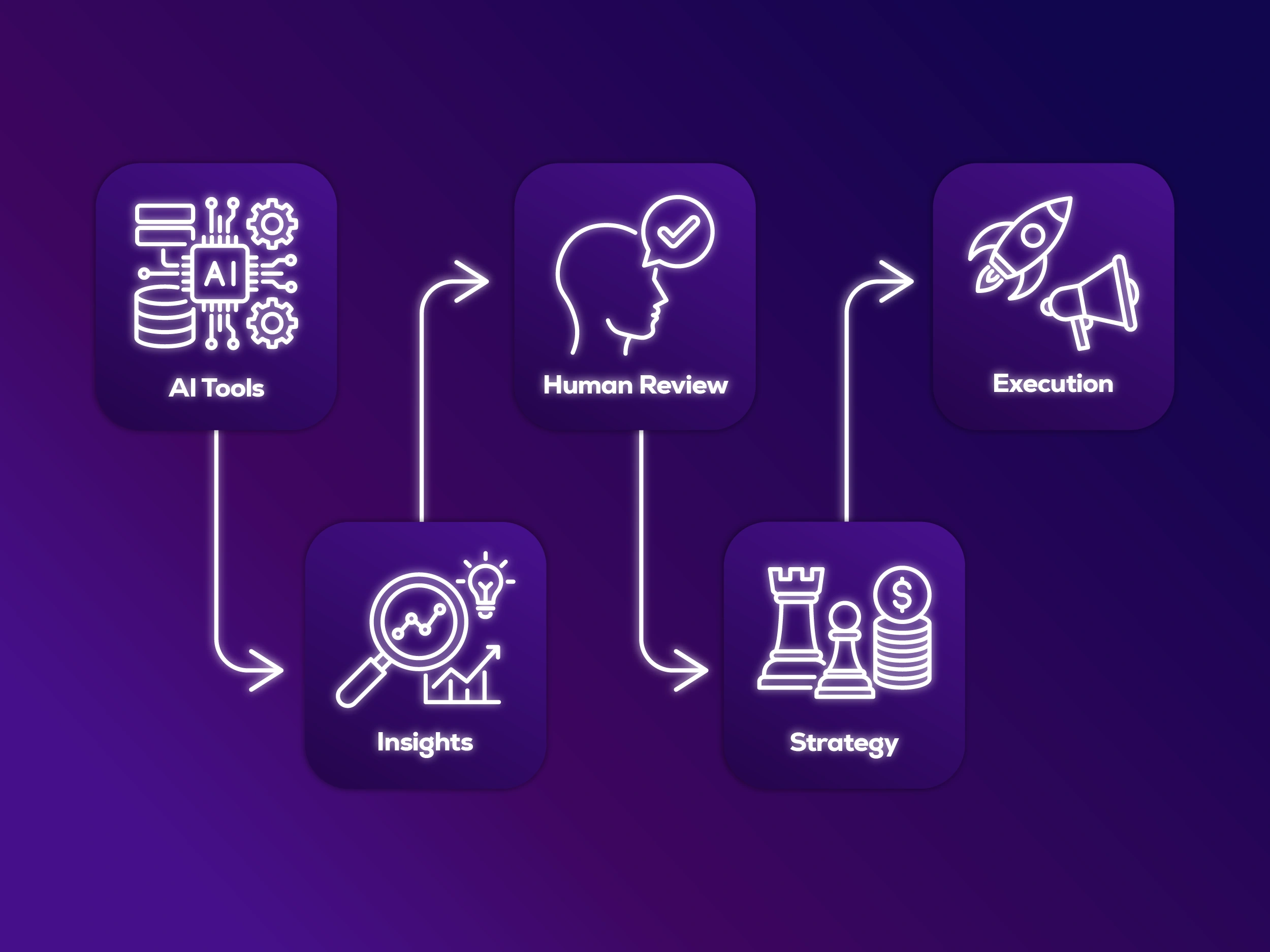
While AI can automate and optimize many marketing tasks, human insight and creativity remain irreplaceable. Our strategists work in tandem with AI, directing its application, interpreting its outputs, and ensuring a nuanced, context-aware approach.
At Growth Conductor, we harness the power of AI through our Content Engine service while maintaining a human-led approach to ensure quality, nuance, and ethical oversight. All of our content writers, graphic designers, and video producers use AI for efficiency but maintain full creative control and final approval on all deliverables. We believe human strategy is the cornerstone of effective marketing.
AI may generate a hundred variations of ad copy, but it takes a human marketer to select the most resonant message and tailor it to the target audience. AI can identify patterns in customer data, but human strategists provide the empathy and storytelling to turn those insights into meaningful brand narratives.
4 Best Practices for Responsible AI Marketing
- Proactive Bias Testing and Mitigation
Regularly audit AI systems for biases, using techniques like counterfactual fairness analysis. Develop mitigation strategies to address any disparities found. - Clear Disclosure of AI Usage Be transparent with customers about how AI is used in your marketing. Provide clear explanations in plain language, not just in the fine print.
- Human Approval Checkpoints Maintain human oversight at key decision points, such as ad creative approval or chatbot response review. Establish clear escalation paths for edge cases.
- Ongoing Monitoring and Refinement Continuously monitor AI systems for fairness, accuracy, and unintended consequences. Refine models and datasets based on real-world performance and feedback.
The Path Forward for Ethical AI in Marketing
As AI continues to advance, the marketing industry will need to work together to establish shared standards and best practices for ethical use. This will require collaboration with regulators, AI developers, consumer advocacy groups, and industry associations.
There is also an opportunity for agencies to differentiate themselves through a commitment to ethical AI. By building trust and transparency, agencies can foster deeper customer relationships and position themselves as leaders in the responsible use of emerging technologies.
Ultimately, the goal should be to harness the power of AI to create more efficient, personalized, and impactful marketing experiences while always keeping human values and ethical principles at the center of our work.
Key Takeaways
- AI is transforming marketing, but raises ethical challenges around bias, privacy, transparency, accountability, and job displacement
- Agencies need practical frameworks to operationalize AI ethics principles in their daily work
- Growth Conductor’s human + AI model leverages AI efficiency while maintaining human oversight and creativity
- Proactive bias audits, transparency, human checkpoints, and ongoing monitoring are critical best practices
- Ethical AI is becoming a key differentiator as clients seek responsible partners
FAQ: Ethics of AI in Creative Marketing
The biggest ethical concerns include algorithmic bias, data privacy, lack of transparency, accountability, and over-automation. These issues can lead to unfair targeting, misuse of consumer data, and loss of trust if not managed properly.
Agencies can use AI responsibly by implementing:
- Human oversight at key decision points
- Transparent communication about AI usage
- Ethical data collection practices
- Regular bias audits and performance reviews
A structured framework ensures AI enhances marketing without compromising trust.
Algorithmic bias occurs when AI systems produce unfair or skewed results due to biased training data. In marketing, this can lead to:
- Unequal ad targeting
- Exclusion of certain demographics
- Reinforcement of existing societal biases
Mitigating this requires diverse datasets and continuous monitoring.
Transparency builds trust with users by clearly explaining:
- How AI is being used
- What data is collected
- How decisions are made
Without transparency, AI can feel manipulative or deceptive, which can damage brand credibility.
AI relies heavily on user data, which raises concerns around:
- Consent and data ownership
- Data security
- Ethical usage of personal information
Marketers must follow strict privacy standards and provide clear opt-in mechanisms.
No—AI enhances efficiency but cannot replace human creativity, strategy, and emotional intelligence. The most effective approach is a human + AI model, where:
- AI handles data processing and automation
- Humans guide strategy, storytelling, and decision-making
Examples include:
- Using AI to manipulate consumer behavior without disclosure
- Collecting or using data without consent
- Deploying biased ad targeting systems
- Publishing misleading AI-generated content
These practices can harm users and damage brand reputation.
Businesses should:
- Set clear approval checkpoints
- Use AI for recommendations, not final decisions
- Monitor outputs continuously
- Involve human strategists in creative and ethical decisions
This ensures AI remains a tool—not the decision-maker.
Responsible AI refers to using artificial intelligence in a way that is:
- Fair and unbiased
- Transparent and explainable
- Accountable
- Privacy-focused
- Guided by human oversight
It ensures AI benefits both businesses and consumers ethically.
Agencies that prioritize ethical AI:
- Build stronger trust with clients and audiences
- Reduce risk of compliance issues
- Deliver more accurate and human-centered campaigns
Ethical AI is quickly becoming a key differentiator in modern marketing.