


AI is not eliminating marketing agencies.
It is restructuring that makes them valuable.
For years, agencies were often hired to execute: write content, manage ad accounts, pull reports, and adjust campaigns. That model worked when platforms required heavy manual oversight.
Today, artificial intelligence can assist — or automate — many of those activities. Content can be drafted quickly. Ad platforms optimize bids automatically. Dashboards update in real time. Testing cycles are compressed.
From the outside, it appears the traditional agency model is under pressure.
But execution has never been the true differentiator.
Strategic clarity, system integration, and performance accountability are.
As automation accelerates, the role of the agency moves higher up the value chain. That shift defines the Future of Marketing Agencies, where AI, automation, and human strategy operate together rather than compete.
Why Businesses Are Questioning the Need for Agencies — and What They’re Missing
The skepticism is understandable.
Small business owners are under pressure to control costs. Marketing leaders are asked to justify budgets. White-label agencies must deliver scalable performance to their own clients.
When AI tools promise faster output at lower cost, the question becomes natural:
“If software can do this, why hire an agency?”
The assumption behind that question is that marketing is primarily about production.
It is not.
Marketing is about alignment.
AI Makes Execution Faster — But Strategy More Critical
AI can produce outputs quickly. But speed increases the consequences of misalignment.
If you generate content aimed at the wrong audience, AI simply helps you move faster in the wrong direction.
If automated campaigns optimize toward the wrong goal, you improve metrics while missing revenue.
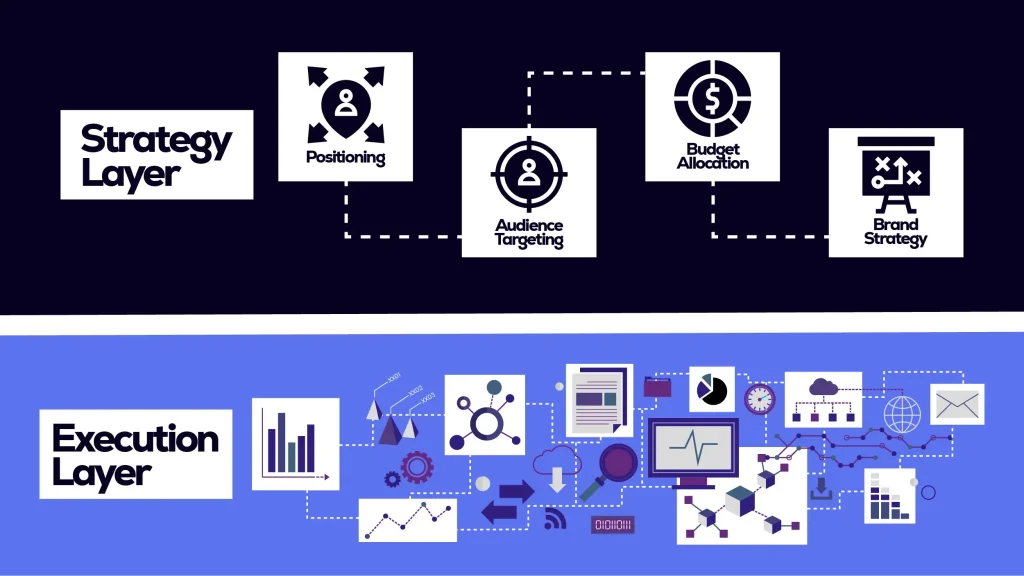
As tools become more efficient, it becomes more important to define:
- Who you are targeting
- How you are positioned
- What success actually means
- Where capital should be allocated
Without that foundation, automation amplifies noise. With it, automation amplifies growth.
That distinction separates tool usage from strategic leadership.
Tool Stacking Often Creates Complexity
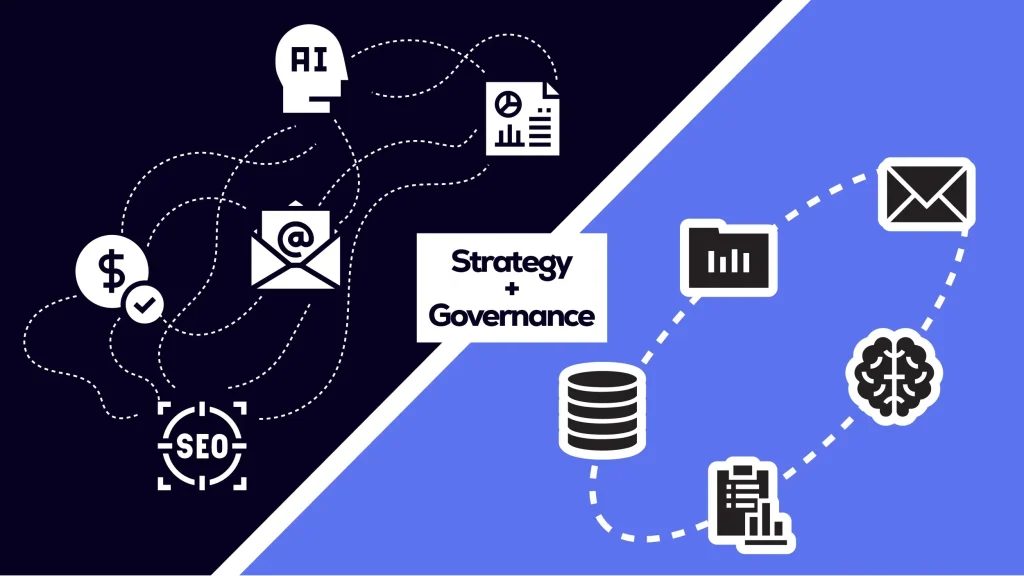
A common pattern among small businesses and white-label operators is tool stacking.
An SEO platform.
A paid media platform.
An email automation system.
A reporting dashboard.
AI layers inside each.
Each tool improves a single function. Few organizations design how those functions reinforce one another.
Marketing performance is system-dependent, not channel-dependent.
Search influences paid performance.
Paid traffic affects retargeting.
Content shapes conversion rates.
Email nurtures demand generated elsewhere.
When these efforts operate independently, optimization becomes fragmented.
Modern agencies that understand AI do not merely deploy tools. They design connected systems where data, messaging, and performance objectives align across channels.
That integration is not automated. It is engineered.
Cost Efficiency vs Performance Infrastructure
It is easy to confuse cost reduction with performance improvement.
Replacing an agency retainer with software subscriptions can lower visible expenses. But marketing success is not measured by how inexpensive your tools are. It is measured by how consistently those tools generate profitable outcomes.
AI can reduce manual workload. It can automate processes. It can even surface opportunities. But without clear priorities and alignment across teams, those efficiencies rarely translate into sustained growth.
This is a point reinforced in McKinsey’s perspective on turning AI into measurable impact. Their research emphasizes that organizations see real returns from AI when it is embedded into structured operating models with defined ownership, performance accountability, and cross-functional coordination. When AI is deployed in isolation — without strategic alignment — its impact is inconsistent.
In other words, AI does not automatically produce growth.
It magnifies the structure that already exists.
If the structure is disciplined and strategically aligned, results accelerate. If it is fragmented, inefficiencies compound faster.
This is why performance infrastructure matters more than ever. Marketing is no longer about simply executing tasks at lower cost. It is about designing systems that consistently convert effort into measurable outcomes.
What AI Can Do Better Than Most Humans
AI should not be underestimated. It excels in areas where speed and scale matter most.
Within structured Performance Marketing Services, automation transforms how campaigns operate. Instead of waiting days or weeks to evaluate performance shifts, AI systems adjust bids in real time, test multiple variations simultaneously, and identify patterns across thousands — sometimes millions — of data points.
What once required manual analysis and constant monitoring can now happen continuously in the background.
Machine learning models process far more signals than any human team could reasonably evaluate. They recognize subtle behavioral trends, predict likely outcomes, and adapt campaigns based on performance data as it evolves.
But here’s the important distinction: productivity gains only occur when AI is implemented inside a structured operating model.
As McKinsey’s analysis of generative AI in marketing explains, organizations see meaningful improvement when AI is paired with governance, workflow redesign, and strategic oversight. Simply layering AI tools onto disorganized processes does not create growth. Integrating AI into disciplined systems does.
AI compresses feedback loops. It enhances precision. It increases efficiency.
For agencies that understand how to integrate it properly, AI becomes leverage — not competition.
Where AI Still Falls Short
AI is a powerful execution engine. It is not a strategic authority.
Strategic Positioning Requires Context
Strategic positioning is not a data problem. It is a judgment problem.
AI can analyze market trends, summarize competitor activity, and highlight performance gaps. What it cannot do is decide which trade-offs your business should make. It cannot determine whether to prioritize margin over volume, authority over promotion, or long-term brand equity over short-term conversions.
Those decisions require context.
Context includes financial realities, competitive pressure, internal capabilities, risk tolerance, and long-term vision. These factors are not simply data inputs — they are leadership considerations.
This dynamic is reflected in Harvard Business Review’s discussion on human decision-making in the age of AI, which argues that AI systems enhance analytical capacity but still depend on human leaders to define priorities and interpret trade-offs. Data can inform direction. It cannot assume responsibility for it.
In marketing, responsibility matters. Strategy requires ownership.
AI can generate options. Humans must choose the path.
Brand Voice and Trust Cannot Be Fully Automated
AI can mimic tone patterns. It cannot internalize founder vision, company history, or evolving market perception.
Trust compounds over time through consistent messaging and emotional alignment.
That is why structured Content Services still require human oversight. AI accelerates drafting and ideation. Humans protect narrative cohesion and credibility.
When content lacks strategic alignment, audiences sense the disconnect.
Integration Remains a Human Discipline
Modern marketing is an ecosystem.
AI tools optimize inside platforms. They do not reconcile strategic conflicts between platforms.
Paid campaigns may push urgency.
Organic content may build authority.
Email may nurture long-term relationships.
Social may emphasize engagement.
Without coordination, these efforts drift apart.
Agencies increasingly serve as system integrators. They ensure every channel reinforces the same growth objective.
That responsibility is expanding as AI adoption grows.
The Real Shift: Agencies as AI-Orchestrated Growth Systems
The shift toward AI integration is not theoretical. It is happening across the industry — but unevenly.
Many organizations are experimenting with generative AI, automation platforms, and machine learning tools. Fewer are redesigning their operating models to support them.
According to Gartner’s survey on generative AI adoption in marketing, adoption is growing, but structured implementation remains inconsistent. High interest does not automatically translate into operational maturity. In fact, many marketing teams report limited integration and unclear governance around AI initiatives.
This gap is critical.
AI is powerful, but without defined ownership, performance benchmarks, workflow integration, and accountability frameworks, it becomes another disconnected tool inside an already fragmented system.
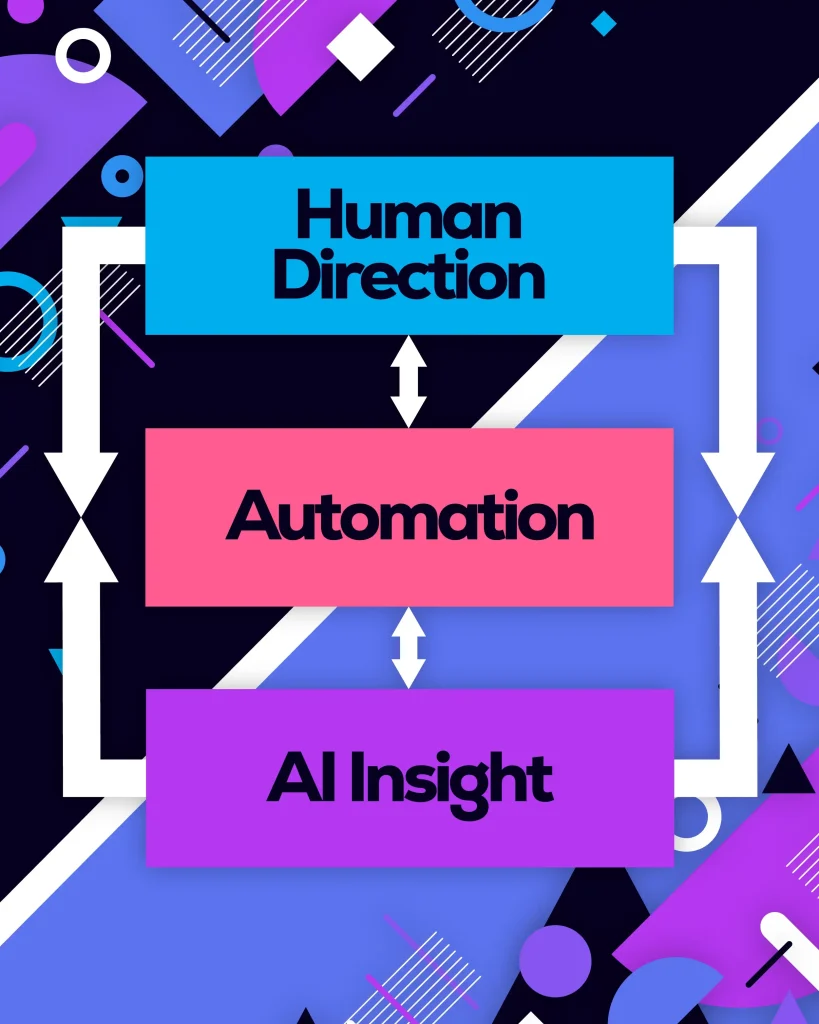
The agencies that will lead in the next decade are not those that simply “use AI.” They are the ones that build governance around it. They design structured processes where automation supports clear objectives, reporting aligns with business metrics, and performance decisions are intentional rather than reactive.
AI adoption without governance creates noise.
AI adoption with integration creates momentum.
That difference defines the next generation of marketing agencies.
So… Will AI Replace Marketing Agencies?
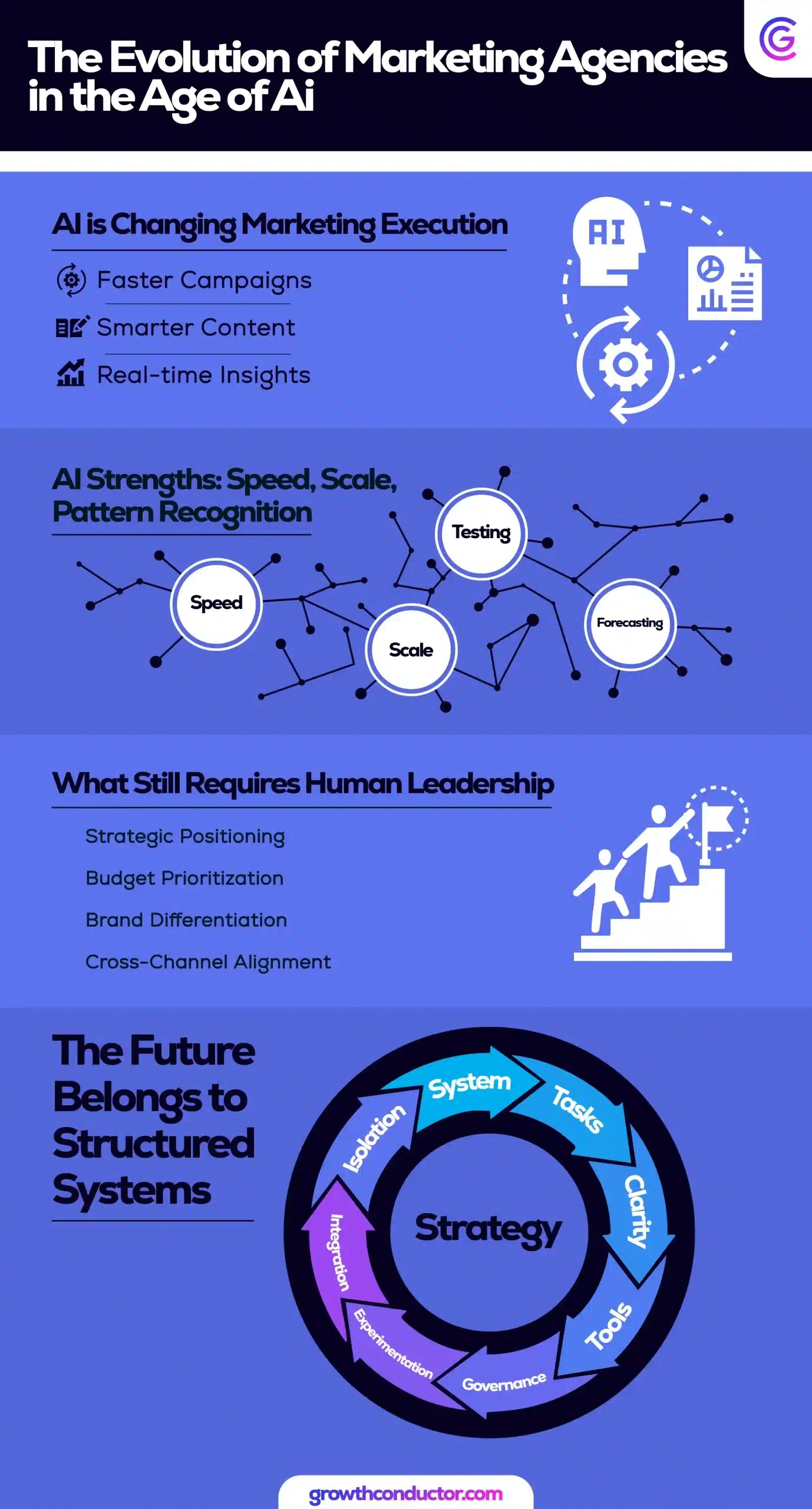
AI will replace outdated agencies. It will not replace adaptive ones.
Agencies whose value is limited to manual production — writing copy, adjusting bids, pulling reports — will feel pressure. Automation reduces the labor required for those tasks, compresses margins, and makes it harder to differentiate on execution alone.
But agencies that evolve beyond production are not threatened by AI. They are strengthened by it.
When an agency provides strategic clarity, it defines what success actually means before any tool is activated. It identifies the right audience, the right positioning, and the right performance benchmarks. AI can accelerate execution, but it cannot define those priorities independently.
When an agency provides cross-channel integration, it ensures that paid media, content, search, email, and analytics reinforce one another rather than compete for attention. Automation may optimize within platforms, but integration across platforms remains a strategic discipline.
When an agency integrates AI-powered execution intentionally, automation becomes a performance multiplier rather than a shortcut. Campaigns iterate faster. Insights surface sooner. Reporting becomes clearer. Decisions improve.
Technology does not eliminate expertise. It raises the bar for it.
AI is exposing the difference between surface-level marketing and disciplined growth systems. Agencies that relied on activity will struggle. Agencies that build systems will expand.
For small business owners evaluating partners — and for white-label agencies looking for scalable, reliable support — the real question is not whether AI replaces agencies. The real question is whether the agency you choose understands how to design and manage a coherent growth framework where AI supports strategy rather than distracts from it.
Because in the years ahead, marketing advantage will not come from access to tools.
It will come from clarity of direction, integration of systems, and accountability for outcomes.
FAQs
No. AI can automate execution and analyze data at scale, but it cannot independently design strategy, align multiple channels, or make complex business trade-offs.
AI enhances efficiency. Agencies provide direction, integration, and accountability. The strongest results come from combining structured strategy with AI-driven execution.
Repetitive, manual tasks are increasingly automated. Strategic, analytical, and creative roles are evolving rather than disappearing.
AI excels at processing large datasets, running tests quickly, identifying performance patterns, and optimizing campaigns in real time.
Small businesses should use AI to improve speed and efficiency while maintaining human oversight for strategy, positioning, and brand consistency.