


What Marketing Agility Means in an AI-Driven World
Marketing agility is not about reacting to every trend or changing direction every week. For small businesses, it means having the ability to adjust campaigns, messaging, or channels when data clearly shows something is not working.
In the age of AI, platforms move faster. Algorithms update, costs fluctuate, and customer behavior shifts in real time. Agility allows businesses to respond without panic or wasted spend. This approach aligns closely with a strong AI-driven marketing strategy where decisions are guided by insight, not impulse.
Marketing agility in the age of AI is the ability for a business to adjust marketing decisions quickly based on real data, while keeping strategy, budget, and human judgment firmly in control.
Agility Is Not the Same as Speed
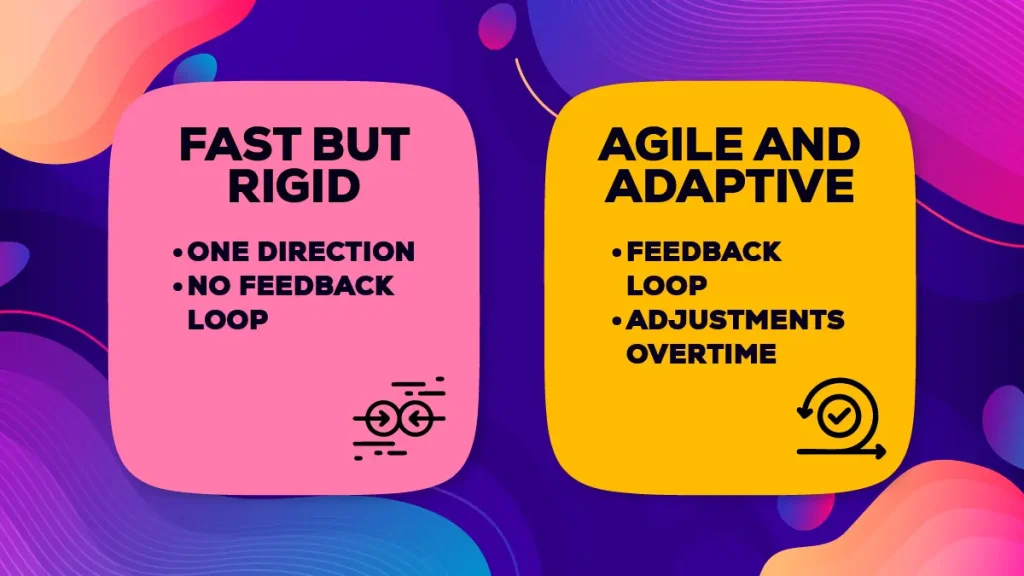
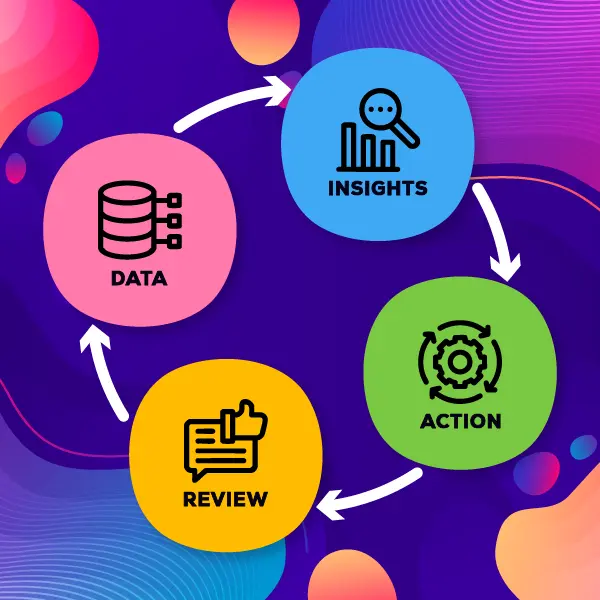
Speed without direction often leads to burnout and budget waste. Agility is different. It focuses on learning cycles: test, review, adjust, and improve. Businesses that master this rhythm make fewer large mistakes and more small, recoverable ones.
How AI Changed Marketing—Whether You’re Ready or Not
AI did not just add new tools to marketing. It changed how quickly results appear and how visible problems become. Campaign performance is now measured continuously, not monthly or quarterly.
AI systems can analyze behavior patterns, predict outcomes, and recommend optimizations faster than any human team. According to IBM’s overview of artificial intelligence, AI excels at processing massive amounts of data, but it still relies on human decision-making to apply insights responsibly.
From One-Time Campaigns to Ongoing Adjustment
Traditional marketing often relied on fixed campaigns with long timelines. AI-driven environments reward continuous improvement instead. The most effective teams combine AI insights with human judgment in AI marketing to decide what to change and what to leave alone.
What Happens When Marketing Isn’t Agile
Rigid marketing plans struggle in AI-driven environments. When platforms shift or customer behavior changes, inflexible strategies break quietly—often before teams realize there is a problem.
Small businesses commonly experience declining performance, rising costs, and confusion over which tools or tactics are responsible. Automation continues to run, but results stall.
Tool Overload Without a System
Many businesses respond by adding more tools. This rarely fixes the issue. Without a clear system for review and adjustment, automation amplifies inefficiency. Structured approaches like an AI-powered content system exist to solve this by connecting strategy, execution, and oversight in one place.
What Agile Marketing Teams Do Differently
Agile teams do not guess more. They learn faster.
They run smaller experiments, track meaningful metrics, and review outcomes consistently. This creates confidence in decision-making instead of constant second-guessing.
Faster Learning Without Chaos
Agility works when guardrails are in place. Clear goals, defined review cycles, and documented decisions prevent constant churn. Teams stay flexible while maintaining control.
Why Agility Is a Competitive Advantage for Small Businesses
Large organizations move slowly due to layers of approval, siloed teams, and rigid processes. Small businesses, on the other hand, can adapt faster when they pair clear strategy with the right execution support.
Marketing agility allows smaller teams to reallocate budget, refine messaging, and adjust channels before wasted spend compounds. This is especially important in paid media, where costs and performance can shift weekly.
When PPC campaigns are reviewed and optimized within an agile framework, businesses avoid set-it-and-forget-it mistakes. This is why many small businesses rely on performance marketing services to manage paid search and paid social with consistent oversight, testing discipline, and accountability.
Research from HubSpot’s marketing insights consistently shows that adaptive marketing teams outperform rigid ones over time.
Smaller Teams, Smarter Moves
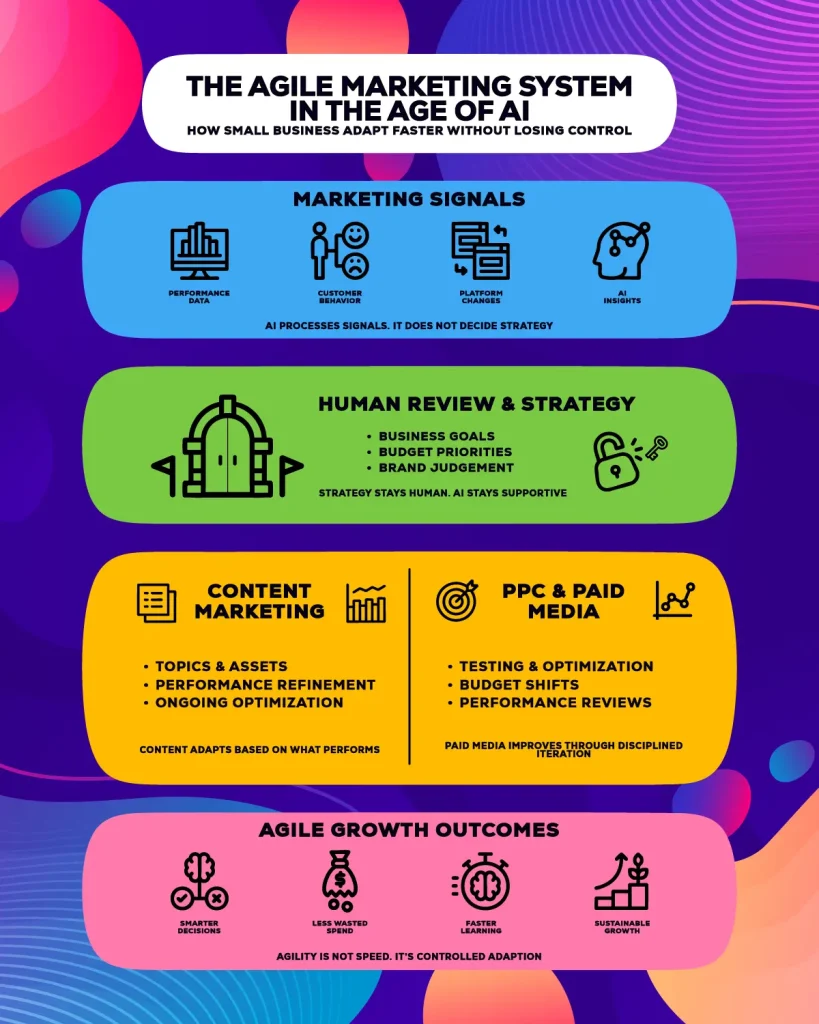
With fewer decision-makers, small businesses can act on insights immediately. AI provides the signals, while experienced marketers provide judgment, testing discipline, and strategic adjustments across both content and paid channels.
Building Marketing Agility Without Losing Control

Agility should never mean handing the keys entirely to AI or automation. The most effective businesses keep strategy in human hands while using systems to execute consistently.
For content, this means publishing with purpose — not just volume. Agile content programs use performance data to refine topics, formats, and distribution over time instead of starting from scratch each quarter. A centralized AI-powered content system helps teams scale content while maintaining clarity and oversight.
For paid media, agility depends on structured review cycles, clear success metrics, and expert intervention when platforms change behavior. When paired with experienced performance marketing support, agile teams can respond to platform changes faster without sacrificing control or clarity.
Strategy Leads, AI Supports
When content and PPC operate within the same strategic framework, agility becomes a competitive advantage instead of a risk. Clear objectives, regular reviews, and experienced guidance allow businesses to move faster without losing control or confidence.
FAQs
Marketing agility is the ability to adjust marketing decisions quickly based on performance data while maintaining clear strategy and oversight.
AI increases the speed of feedback and change. Without agility, businesses struggle to respond effectively to new insights.
Yes. Smaller teams often adapt faster when they use AI as a support system rather than a replacement for strategy.
No. Agile marketing focuses on intentional adjustments, not constant experimentation without direction.