


What Is a Video Marketing Strategy?
A video marketing strategy is a structured plan for using video content to achieve specific business goals across the marketing funnel — from awareness to conversion and retention. Rather than creating videos reactively, an effective strategy defines why each video exists, who it serves, where it will be distributed, and how success will be measured.
As video continues to dominate digital consumption, businesses that treat video as a strategic system — not a creative afterthought — consistently outperform those that publish sporadically. According to video marketing statistics, engagement and retention are strongly tied to clarity of purpose and relevance, not production value alone.
A strong video strategy connects content planning, audience understanding, distribution, and performance measurement into a repeatable growth engine.
Align Video Content With Business and Funnel Goals
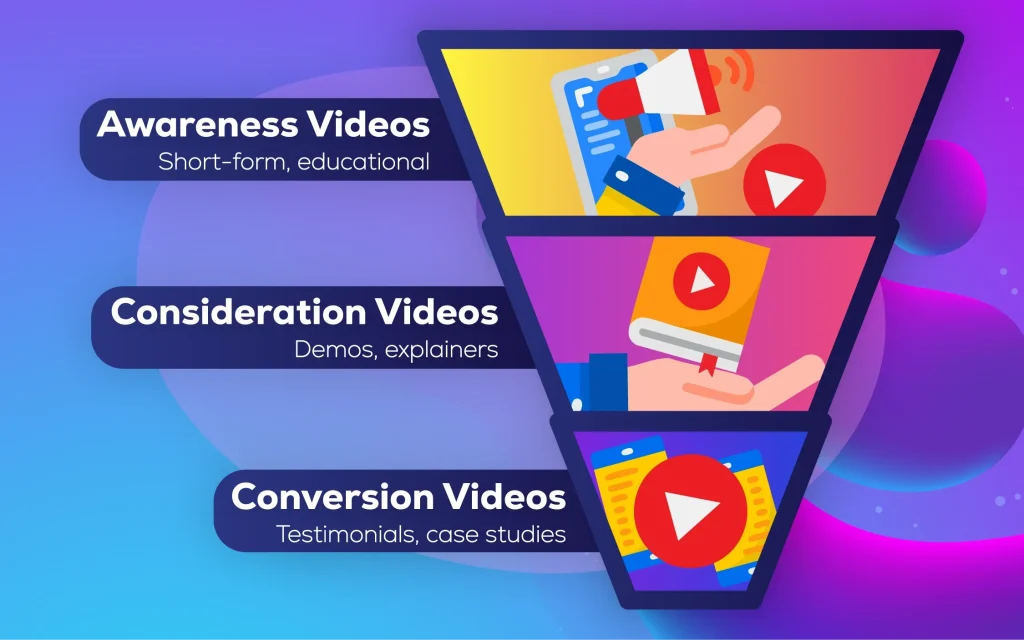
An effective video marketing strategy starts by aligning content with business objectives. Every video should support a clear outcome — awareness, consideration, conversion, or post-sale engagement.
Awareness-Stage Video Content
Awareness videos introduce your brand, perspective, or solution to new audiences. These videos prioritize clarity, relevance, and emotional connection over depth.
Common awareness formats include:
- Short-form social video
- Educational explainers
- Brand storytelling clips
These videos perform best when optimized for discovery and quick engagement rather than immediate conversion.
Consideration and Conversion Videos
Mid- and bottom-funnel videos help prospects evaluate solutions and make decisions. These videos answer practical questions and reduce uncertainty.
High-performing formats include:
- Product demonstrations
- Customer testimonials
- Case study walkthroughs
As outlined in video marketing strategy guidance, conversion-focused videos are most effective when they mirror real buyer concerns and clearly communicate value.
Know Your Audience Before You Hit Record
Audience understanding is the foundation of any successful video marketing strategy. Without it, even well-produced videos struggle to perform.
Effective audience research goes beyond demographics and focuses on:
- Pain points and motivations
- Content consumption habits
- Platform preferences
For example, the expectations of a LinkedIn viewer differ significantly from those of a TikTok or YouTube audience. Strategic video teams design content for how and where people actually watch — not where it’s easiest to publish.
Mapping audience segments to video formats ensures each piece of content feels intentional rather than generic.
Choose the Right Video Formats and Platforms
Video format and distribution choices directly impact performance. A common mistake is creating one video and forcing it across every platform without adaptation.
Short-Form vs. Long-Form Video Strategy
Short-form video excels at:
- Capturing attention
- Driving awareness
- Encouraging sharing
Long-form video supports:
- Education and trust-building
- Complex product explanations
- SEO and on-site engagement
The most effective strategies use both, treating short-form as the entry point and long-form as the depth layer.
Platform-Specific Video Strategy
Each platform rewards different behaviors. Social platforms prioritize retention and interaction, while on-site video often supports conversion and dwell time.
A mature video marketing strategy plans content by platform instead of retrofitting after production. This approach mirrors broader content marketing strategy best practices, where distribution informs creation.
Optimize Videos for Search, Engagement, and Retention
Optimization is where strategy becomes measurable.
Video SEO Best Practices
Search-optimized videos improve discoverability and long-term value. Core practices include:
- Descriptive titles and summaries
- Transcripts and captions for accessibility and indexing
- Compelling thumbnails that set clear expectations
These elements help search engines understand video context while improving user engagement.
Engagement Optimization Techniques
Most viewers decide whether to keep watching within the first few seconds. Effective videos:
- Open with a clear hook
- Set expectations early
- Include a single, focused call to action
Small structural improvements often outperform expensive production upgrades.
Measure and Improve Video Marketing Performance
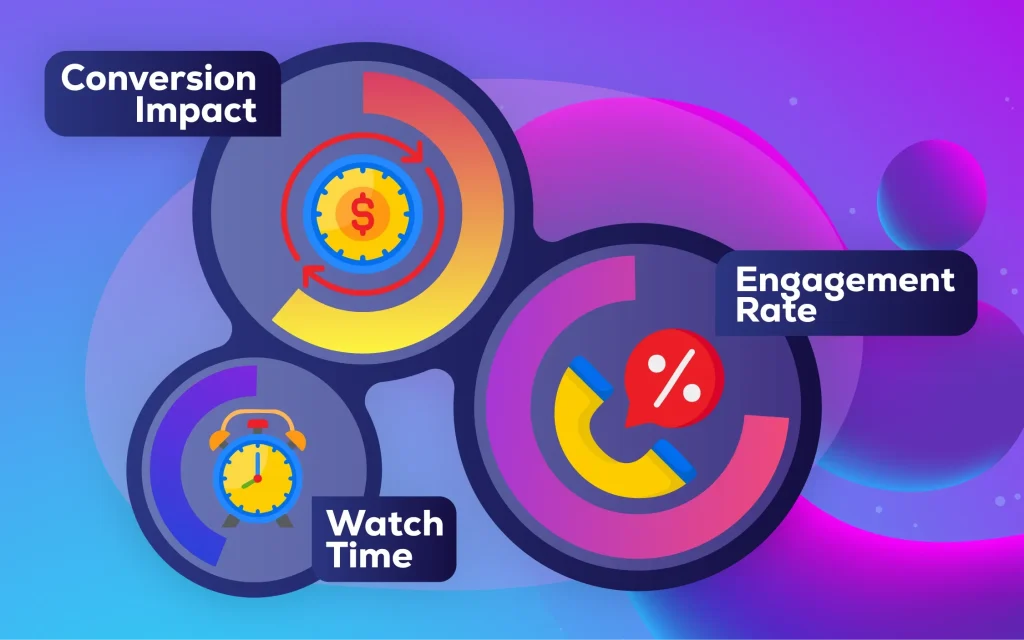
Without measurement, video marketing becomes guesswork. A strong strategy defines success before publishing and tracks performance consistently.
Key Video Marketing Metrics to Track
Metrics should align with funnel stage:
- Watch time and retention
- Engagement rate
- Click-through and conversion rate
As discussed in data-driven marketing insights, performance measurement enables continuous optimization rather than one-off wins.
Using Performance Data to Refine Strategy
High-performing teams use data to:
- Double down on effective formats
- Adjust messaging based on drop-off points
- Refine distribution strategies
Iteration turns video into a compounding asset rather than a disposable tactic.
Common Video Marketing Mistakes to Avoid
Even experienced teams fall into predictable traps.
Strategy-Level Mistakes
- Creating videos without defined goals
- Treating all platforms the same
- Measuring vanity metrics only
Execution-Level Mistakes
- Overproducing low-impact content
- Weak openings and unclear messaging
- Ignoring performance data
Avoiding these pitfalls often delivers faster gains than producing more content.
Conclusion: Turning Video Into a Scalable Growth Channel
An effective video marketing strategy is not about volume or viral hits. It’s about clarity, alignment, and iteration. When video content is tied to business goals, designed for real audiences, and continuously optimized, it becomes one of the most powerful tools in modern marketing.
Organizations that treat video strategically — as part of a broader SEO-optimized content strategy — build sustainable engagement and measurable growth over time.
FAQs — Video Marketing Strategy
A video marketing strategy is a structured plan for using video content to support specific business goals, such as brand awareness, lead generation, or conversions. It defines the audience, video formats, distribution channels, and success metrics before any video is created.
Without a strategy, video content becomes inconsistent and difficult to measure. A clear video marketing strategy ensures each video has a purpose, aligns with the marketing funnel, and contributes to measurable business outcomes rather than vanity metrics.
The most effective video types depend on funnel stage. Short-form educational or brand videos work well for awareness, product demos and explainers support consideration, and testimonials or case studies are most effective for conversions.
There is no single ideal length. Short-form videos perform best for awareness and social platforms, while longer videos are effective for education, product explanation, and on-site engagement. The goal is to match length to intent, not to hit a specific duration.
Success is measured using metrics aligned to the video’s goal, such as watch time and engagement for awareness, or click-through and conversion rate for lower-funnel videos. Tracking performance over time allows teams to refine strategy and improve results.
Yes. Small businesses often see strong returns from video marketing when they focus on clarity, relevance, and consistency rather than high production budgets. Strategy and audience alignment matter more than expensive equipment.