


Google advertising costs in 2026 aren’t increasing simply because “Google is more expensive.” They’re rising because the auction, automation, and competition layers now reinforce each other. Cost per click (CPC) has become a lagging signal—a visible symptom of deeper mechanics like intent density, relevance, bidding logic, and conversion efficiency.
Understanding those mechanics is the difference between scaling profitably and subsidizing the auction.
How Google Ads Pricing Really Works in 2026

Google Ads pricing is determined by a real-time auction designed to maximize user relevance, not reward the highest bidder.
Each eligible search triggers an auction where advertisers compete based on Ad Rank, which combines bid amount, Quality Score, and contextual signals. Since Google’s shift to a first-price auction, advertisers often pay close to their actual bid rather than a discounted clearing price. That single change quietly made strategy more important than brute force.
This is why a cohesive paid search strategy now matters more than isolated optimizations (paid search strategy — https://growthconductor.com/paid-search-strategy/).
Authority reference:
Google explains the auction mechanics and Quality Score weighting in its official documentation “How the Google Ads auction works.”
The Biggest Factors That Influence Google Advertising Costs
Google advertising costs are shaped by both market forces and advertiser-controlled variables. Most teams overestimate the former and underinvest in the latter.
Industry Competition and Market Saturation
Highly competitive verticals—legal, finance, SaaS, healthcare—push CPCs upward because multiple advertisers chase the same high-intent queries. As more brands mature in performance marketing, inefficient accounts are priced out quickly. Competition doesn’t just raise costs; it amplifies irrelevance.
Keyword Intent Matters More Than Keyword Volume
Transactional keywords with clear buying intent command premium pricing. Informational keywords are cheaper but often convert poorly without strong mid-funnel strategy. Broad match keywords paired with automation can scale reach, but without intent discipline, they quietly inflate spend.
Quality Score Is Still a Silent Multiplier
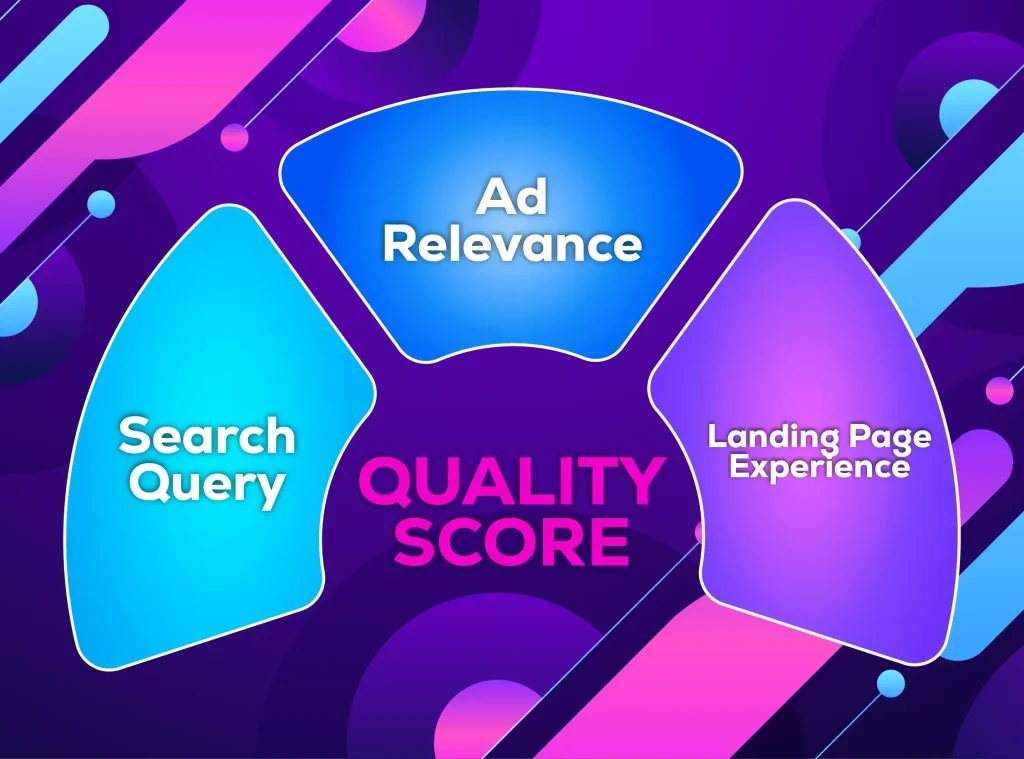
Quality Score remains one of the most misunderstood cost levers. Higher relevance improves expected click-through rate, which lowers effective CPC—even in aggressive auctions. Landing page experience, message match, and page speed all feed this score, making conversion optimization a spend-control mechanism, not just a UX improvement.
Automation, AI, and Why CPCs Feel Higher
Smart Bidding changed how advertisers experience cost.
Google’s AI now optimizes toward outcomes like CPA or ROAS, not cheap clicks. That often means bidding more aggressively on high-conversion opportunities while ignoring cheaper—but lower-quality—traffic. To many teams, this feels like inflation. In reality, it’s selective aggression.
When conversion signals are clean and meaningful, automation reduces waste. When signals are noisy or misaligned, it accelerates budget burn. This is why AI-driven PPC systems must be architected deliberately, not enabled blindly.
Authority reference:
Think with Google outlines how automation reallocates spend toward higher-value moments with their Smart bidding and value-based optimization.
Budgeting Smarter (Not Cheaper) in 2026
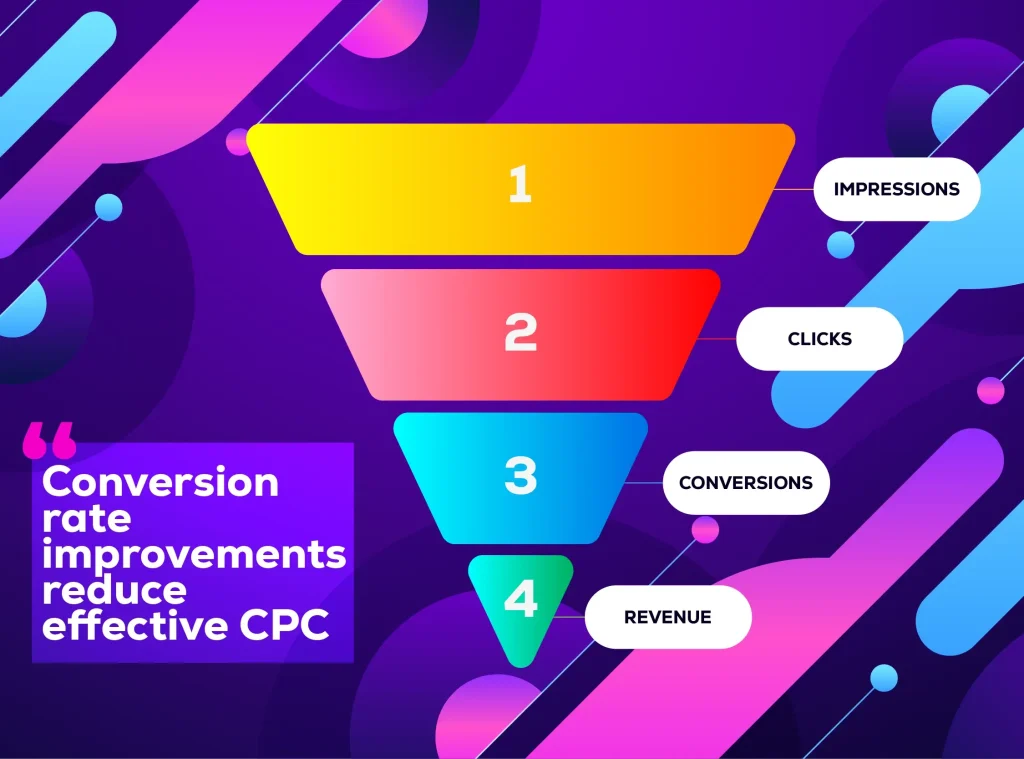
Optimizing for lower CPC is a legacy mindset. Modern Google Ads performance is measured by cost per outcome, not cost per click.
Improving conversion rate, tightening intent alignment, and clarifying offers often reduce total ad spend even if CPC rises. Funnel math rewards efficiency upstream. A 20% conversion lift frequently outperforms a 30% CPC reduction—without fighting the auction.
This is why budget planning must be tied to economics, not averages.
Can Small and Mid-Sized Businesses Still Afford Google Ads?
Yes—but only if Google Ads is treated as a system, not a channel.
Businesses with strong margins, clear differentiation, and fast feedback loops still win. Those relying on generic offers, weak landing pages, or “set-and-forget” automation struggle regardless of budget size. When Google Ads stops working, it’s usually a strategy mismatch, not a pricing problem.
Authority reference:
Search Engine Land consistently notes that relevance and efficiency—not budget size—separate winners from losers in competitive auctions. You can learn more at Your Guide to Google Ads Smart Bidding.
The Real Question Isn’t “How Much Do Google Ads Cost?”
The real question is how much inefficiency your system can tolerate.
Google advertising costs in 2026 reward relevance, punish guesswork, and magnify both good and bad strategies. Teams that understand the mechanics spend with confidence. Teams that don’t pay a premium for learning in public.
FAQs
Costs vary by industry, competition, and intent. CPC alone is no longer a reliable indicator of affordability or performance.
Increased competition, first-price auctions, and AI-driven bidding expose inefficiencies faster and more aggressively.
Industry competition, keyword intent, Quality Score, and bidding strategy have the largest direct impact.
Yes—when they focus on intent alignment, conversion efficiency, and realistic unit economics.
Smart Bidding reallocates spend toward higher-value traffic. Costs rise when conversion signals are weak or misaligned.