


What AI Personalization Really Means
AI personalization is the use of customer behavior data to tailor marketing messages, timing, and channel experiences based on real-time intent rather than static audience segments.
As part of a broader AI-driven marketing strategy, AI personalization means using real customer behavior to guide marketing decisions across channels.
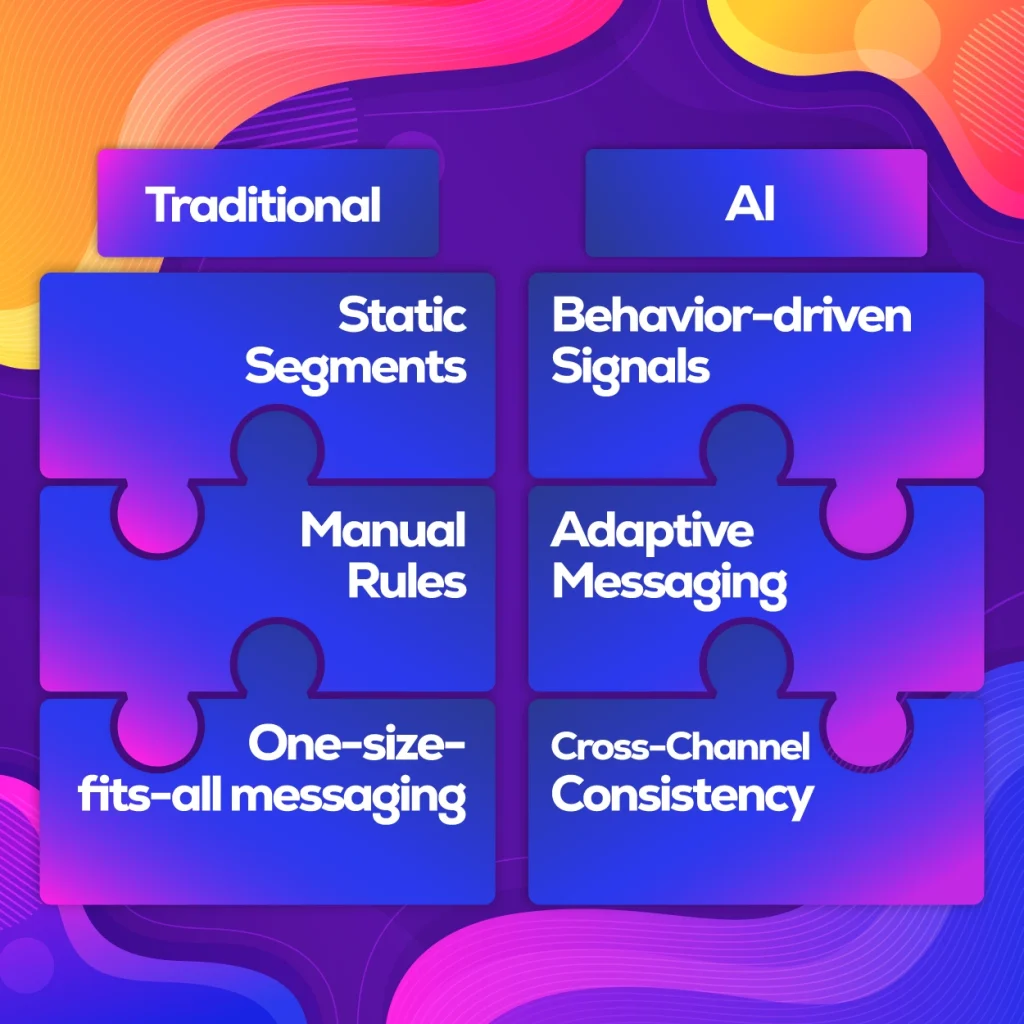
Instead of relying on fixed audience lists or assumptions, AI looks at what people actually do—what they search for, click on, ignore, or return to. Based on those signals, AI helps adjust messaging so it is more relevant to where someone is in their journey.
This matters because customers no longer move in straight lines. They jump between search, ads, email, social media, and websites. AI helps keep the experience consistent as they move.
Moving Beyond Static Audience Segments
Traditional personalization groups people into static segments that rarely change. AI personalization adapts as behavior changes.
Rather than asking, “Which audience is this person in?” AI asks, “What is this person trying to do right now?”
That shift allows marketing to feel timely and helpful without constant manual updates. Strategy still comes from humans. AI simply helps execute it more efficiently.
When personalization is tied to a broader AI-driven marketing strategy, it becomes scalable instead of chaotic.
How AI Connects the Customer Journey Across Channels
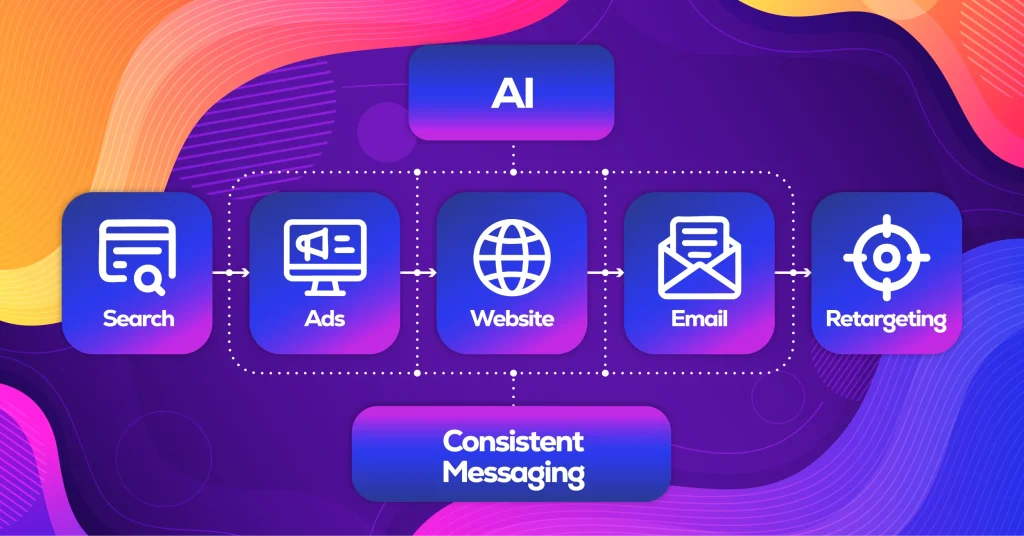
AI connects signals from different platforms—website activity, paid ads, search behavior, email engagement, and CRM data—to create a clearer picture of intent. This aligns with findings from Salesforce’s State of the Connected Customer report , which shows that customers expect consistent experiences as they move between touchpoints.
Without this connection, marketing often feels disjointed. With it, the journey feels intentional.
Using Data Across Channels Without Creating Chaos
Effective marketing personalization relies on first-party data—signals customers willingly share through their actions.
When this data is connected across systems, AI can identify patterns that are difficult to see manually. This leads to better timing, clearer messaging, and fewer wasted impressions.
Disconnected tools create mixed signals. Connected systems create clarity.
Where Paid Search and AI Personalization Overlap
Paid search is one of the clearest examples of AI-driven personalization in action.
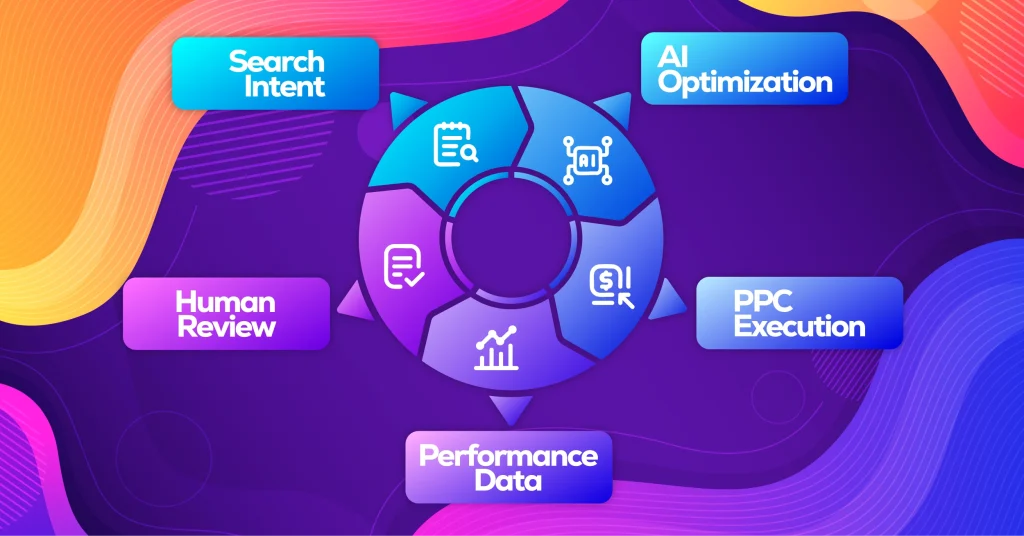
Search behavior shows direct intent. AI can help adjust bids, targeting, and messaging based on keywords, location, device, and previous interactions. This allows ads to respond more accurately to what someone is looking for in that moment.
However, automation alone is not enough. Without strategy and oversight, AI can optimize toward the wrong outcomes. That’s why performance-focused PPC management works best when AI is guided by clear goals, messaging, and budget discipline.
Real-Time Adjustments That Improve Results
AI is especially effective at making real-time adjustments.
It can pause ads for recent customers, shift spend toward higher-intent searches, or adjust messaging based on engagement levels. These changes happen quickly, but only within the rules humans define.
AI handles execution. Humans stay in control.
Where AI Personalization Works Best for SMBs
For small and mid-size businesses, AI personalization is most effective in areas with clear intent signals and fast feedback loops.
This includes:
- Paid search and paid social campaigns
- Website content experiences
- Email timing and segmentation
- Retargeting and remarketing
Paid media often leads the way because intent is explicit. Someone searching is already telling you what they want. AI helps respond more efficiently when guided by the right strategy.
The Risks of Over-Automation
AI becomes a liability when it operates without guardrails.
Over-automation can lead to wasted spend, inconsistent messaging, or experiences that feel disconnected from your brand. AI should never decide what your brand stands for or why you are advertising.
That responsibility stays with people. This balance is explored further in The Human Element in AI-Powered Marketing.
Why Strategy Must Come Before Automation
AI does not replace marketing strategy. It follows it.
Clear goals, defined audiences, and consistent messaging must exist before AI-driven personalization works. Without that foundation, automation simply amplifies inefficiency—especially in paid campaigns.
When strategy leads and AI supports, personalization becomes a growth multiplier instead of a risk.
Scaling Personalization Without Adding More Tools
Many businesses assume personalization requires more platforms. Often, the opposite is true.
Fewer, better-integrated systems reduce complexity and improve consistency. When content, strategy, and paid performance are aligned, AI can support growth without increasing chaos.
This is why structured content marketing services paired with disciplined PPC execution outperform scattered tool stacks.
Key Takeaways
AI personalization works best when it is:
- Based on real behavior, not assumptions
- Coordinated across channels
- Guided by strategy and human oversight
For SMBs, success is not about fully automating marketing. It is about using AI to support smarter execution—especially in high-intent channels like paid search.
When strategy leads and AI supports, personalized customer journeys become sustainable, scalable, and trustworthy.
FAQs
AI analyzes behavior across search, ads, email, websites, and other touchpoints to adjust messaging and timing based on real customer intent.
Cross-channel personalization ensures customers receive consistent, relevant experiences as they move between platforms instead of seeing disconnected messages.
No. SMBs often benefit more because AI helps small teams execute personalization efficiently when paired with clear strategy.
AI helps optimize bids, targeting, and messaging based on intent signals like keywords and past behavior, while humans guide goals and budgets.
Yes, if it runs without oversight. AI must operate within defined goals and guardrails to avoid inefficient spend.
Ethical AI personalization relies on first-party data—actions customers take voluntarily—rather than invasive tracking.